This week's Pop City features a colorful piece on "Innovation" and what a wonderful thing it is, too, for cities and universities and people who inhabit both.
As someone who studies creativity and innovation for a living, this sort of thing always makes me nervous, because "innovation" has an inescapable "I know it when I see it" character. Innovation is hard to define, and it's hard to measure, and it's especially hard to figure out how to get more of it. Look at the huge patent law case now pending in the Supreme Court, KSR v. Teleflex, which was argued yesterday. American patent law requires that inventors can patente inventions that are "nonobvious." (Patent laws in other countries have similar requirements but use somewhat less obtuse language.) What is "obvious"? What is "nonobvious"? Patent lawyers and patent judges have spent more than a century trying to figure this out, and the best they can do, really, is "I know it when I see it." The transcript of yesterday's oral argument in KSR is online here, and what you read is three very accomplished, sophisticated advocates (one for each side, plus one for the federal government) in dialogue with some federal judges who understand deeply what's at stake (and a couple of federal judges who don't). The stakes couldn't be bigger -- yet there is an astonishing lack of consensus about how the patent system should behave.
We like innovation (and "we" means not just Pittsburgh, but society in general), and we like it a lot, and it is certainly worth celebrating that Pitt and CMU rake in tons of federal research dollars and have managed to attract major private R&D efforts from the likes of Intel, Google, Seagate, and Siemens, among other firms. Cupcakes, of course, are part of this equation, too, but cupcake innovation seems to have little to do with intellectual property law. For more on that, see my post here.
But does it all really add up to anything in terms of regional growth? I hope so, but in the end, who knows?

Wednesday, November 29, 2006

Tuesday, November 28, 2006
The Rise of the Cupcake Class
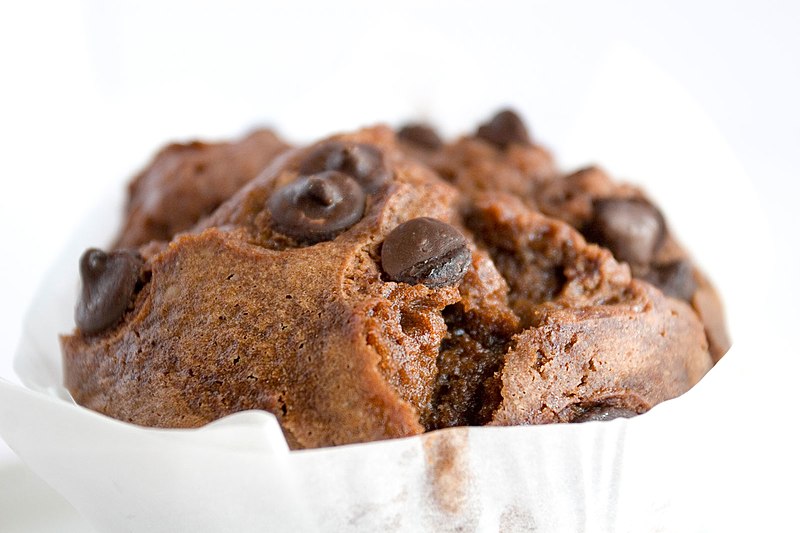 Yes, Chris Briem actually used the phrase first, but he knows that I was thinking along the same lines and yet understandably reluctant to say it out loud.
 Now that I think about the phrase, though, it makes perfect sense. Cities that want to compete economically in the 21st century need to attract and retain The Cupcake Class: People with the time, money, and taste to consume small portions of upscale baked goods.
Take a look at my small but expanding list of cupcake retailers; run a search on Google for cupcake blogs. What you find are cities laden with people who are energetic and entrepreneurial -- San Francisco, New York, Chicago, Washington DC. You find growing economies. These aren't necessarily the hippest places, but they are places that any city today would be proud to emulate. And these are cities that are putting away gourmet cupcakes by the truckload. Clearly, the more cupcakes-sold-per-capita, the better off a city is likely to be.
Next, and dovetailing only semi-seriously with my nascent series on The New Pittsburgh: Cupcake Class strategies. If we bake it, will they come?
Monday, November 27, 2006
More on immigrant entrepreneurship
Worth a read is this report just out on the impact of immigrants on entrepreneurship: American Made: The Impact of Immigrant Entrepreneurs and Professionals on US Competitiveness, by Stuart Anderson and Michaela Platzer and commissioned by the National Venture Capital Association.
Sunday, November 26, 2006
The Urban Cupcake Experience
In this corner, Pittsburgh does poorly (again) in a recent report on how cities fare in the battle to attract and keep the 25-to-34-year-old professional population. (Harold Miller breaks down some statistics here.)
And in this corner, Pittsburgh finally has an "urban cupcake" store to call its own -- Dozen Cupcakes, which opens a retail storefront soon, in Squirrel Hill. Gourmet cupcakes are the foodie fad of the moment -- check out Seattle's Cupcake Royale, Chicago's Cupcakes, and San Francisco's Citizen Cupcake.
What's the connection? My guess is that food fads follow the 25-to-34 professional demographic. If Dozen Cupcakes can carve out a niche in retail, that will be good news for Pittsburgh on two fronts. More cupcakes for all of us -- and a small sign that there's enough money coursing through at least one slice of the Pittsburgh economy to give the city some hip cred.
UPDATE: Thanks, Anon (in the Comments) for helping to round out the master cupcake list:
Babycakes (New York)
Magnolia (New York)
Sweet Mandy B's (Chicago)
STILL MORE TASTY CAKES:
Cake Love (Washington, DC)
Citizen Cupcake (San Francisco)
Cupcake Cafe (New York)
AND LET'S NOT FORGET:
Sprinkles Cupcakes (Los Angeles)
And in this corner, Pittsburgh finally has an "urban cupcake" store to call its own -- Dozen Cupcakes, which opens a retail storefront soon, in Squirrel Hill. Gourmet cupcakes are the foodie fad of the moment -- check out Seattle's Cupcake Royale, Chicago's Cupcakes, and San Francisco's Citizen Cupcake.
What's the connection? My guess is that food fads follow the 25-to-34 professional demographic. If Dozen Cupcakes can carve out a niche in retail, that will be good news for Pittsburgh on two fronts. More cupcakes for all of us -- and a small sign that there's enough money coursing through at least one slice of the Pittsburgh economy to give the city some hip cred.
UPDATE: Thanks, Anon (in the Comments) for helping to round out the master cupcake list:
Babycakes (New York)
Magnolia (New York)
Sweet Mandy B's (Chicago)
STILL MORE TASTY CAKES:
Cake Love (Washington, DC)
Citizen Cupcake (San Francisco)
Cupcake Cafe (New York)
AND LET'S NOT FORGET:
Sprinkles Cupcakes (Los Angeles)
Thursday, November 23, 2006
Giving Thanks
Happy Thanksgiving everyone, and a special thanks to all of you Pittsblog readers and commenters for your patience, indulgence, and even criticism!
Wednesday, November 22, 2006
Do Institutions Matter?
An anonymous comment below made the following argument:
So many things that I disagree with! I'll pick just one: The idea that institutional change doesn't matter.
Universities don't grow the region. Private enterprise grows the region. Foundations don't drive change. A wide variety of organizations (public, private, blended, small, large) and people (individual, and group) drive change. The Conference facilitates dialog. (Sorry -- had to stop laughing and get up off the floor!) Really, no, it doesn't. (There's another post on this that I've been holding, but maybe I'll toss it in soon.)
Institutions do matter to economic and cultural growth. Pittsburgh has a lot of them, most of them holdovers from earlier eras when people accepted being told what to do by other people who were wealthier than they were. Fortunately, we don't -- or shouldn't -- accept that any more. I blog observations about what the region needs, but I have no money or power and no ability to coerce anyone or anything. If Pittsburgh continues to rely foundations and the ACCD to tell people what to do, Pittsburgh will get what it has now. Pittsburgh's universities need to step up, but not because the universities drive economic growth (they don't), but because the universities are among the handful of institutions locally that have an asset base that should give them a stake in political and economic decisionmaking. And as the last couple of posts make clear, there are lots of other, diverse institutions that need to become bigger voices here.
More, maybe, later.
Universities grow the region.
Foundations drive change.
The Conference facilitates dialog.
At times, some do their job better than others.
Where's the problem?
So many things that I disagree with! I'll pick just one: The idea that institutional change doesn't matter.
Universities don't grow the region. Private enterprise grows the region. Foundations don't drive change. A wide variety of organizations (public, private, blended, small, large) and people (individual, and group) drive change. The Conference facilitates dialog. (Sorry -- had to stop laughing and get up off the floor!) Really, no, it doesn't. (There's another post on this that I've been holding, but maybe I'll toss it in soon.)
Institutions do matter to economic and cultural growth. Pittsburgh has a lot of them, most of them holdovers from earlier eras when people accepted being told what to do by other people who were wealthier than they were. Fortunately, we don't -- or shouldn't -- accept that any more. I blog observations about what the region needs, but I have no money or power and no ability to coerce anyone or anything. If Pittsburgh continues to rely foundations and the ACCD to tell people what to do, Pittsburgh will get what it has now. Pittsburgh's universities need to step up, but not because the universities drive economic growth (they don't), but because the universities are among the handful of institutions locally that have an asset base that should give them a stake in political and economic decisionmaking. And as the last couple of posts make clear, there are lots of other, diverse institutions that need to become bigger voices here.
More, maybe, later.
Tuesday, November 21, 2006
Voice for Pittsburgh
A friend sent me the following information. For more, go to the Voice for Pittsburgh website.
Voice for Pittsburgh is a technology, health and information fair providing information on assistive communications solutions for those with severe speech disabilities. Sponsored by DynaVox Technologies, Mayer-Johnson and Mass Mutual, this free family event will also provide information on the professional and personal support, and financial assistance that is available to families who wish to explore this exciting way to help a loved one find his or her voice.
Information and activities include:
• Hands-on Speech Device Showroom
• Financial Planning
• Books and Learning Resources
• Kid’s Activities
• Success Stories
• Refreshments
• Funding Solutions
• Se habla espanol
• Child Care Available
If you are challenged by or care for someone challenged by a severe speech disability, you won’t want to miss this event!
Saturday, December 2, 2006
9:30 AM – 1:30 PM
Doors open at 9:00 AM
Holiday Inn Greentree
401 Holiday Drive
Pittsburgh, PA 15220
To register for this free family event, call 1-866-XPRES 01.
Subscribe to:
Posts (Atom)